




What Is Paintless Dent Repair (PDR)? Complete Guide for Dent Removal
Paintless Dent Repair, also known as PDR, is a professional method used to remove dents from vehicle surfaces without repainting or damaging the original factory finish. This technique is widely used by auto body technicians, mobile dent repair specialists, detailing professionals, and car owners who want a clean, efficient, and cost-effective dent repair solution.
Unlike traditional body repair, PDR does not require sanding, body filler, primer, or paint. Instead, technicians use special PDR tools to carefully reshape the metal and restore the damaged area as close as possible to its original form. This makes paintless dent repair one of the most practical and environmentally responsible methods for repairing many types of dents.
Today, PDR is widely used across Europe and many other markets because it helps preserve the value of the vehicle, reduces repair time, and avoids unnecessary repainting.
What Is Paintless Dent Repair?
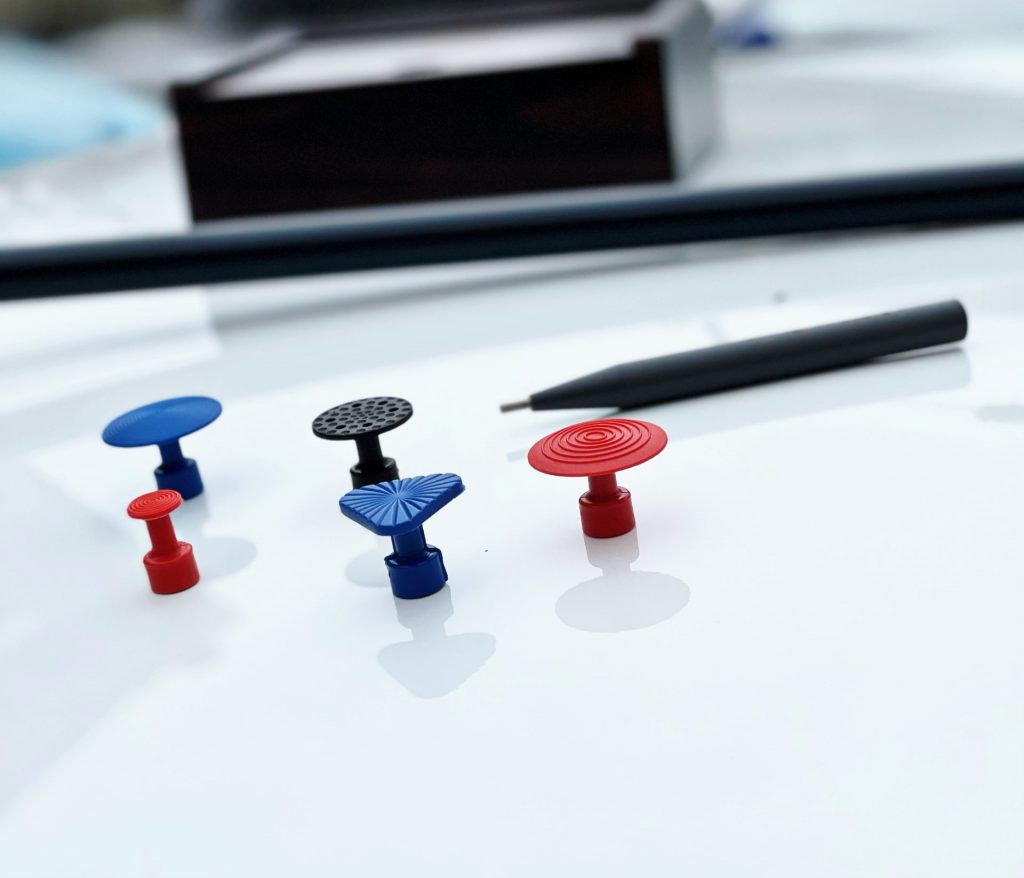
Paintless Dent Repair is a technique that involves carefully moving the metal back into its original position. This can be done from behind the damaged area using PDR rods, hooks, and whale tail tools, or from the outside using glue pulling systems, cold glue, glue tabs, mini lifters, and slide hammers.
The main goal of PDR is to remove dents while keeping the original paintwork intact. When the paint surface is not cracked and the metal has not been overstretched, PDR can often deliver excellent results without the need for traditional body shop repair.
This method is commonly used for:
- hail damage
- door dings
- parking dents
- small and medium dents
- minor body damage
- shallow creases
- dents on doors, hoods, roofs, fenders, and quarter sections
For professional results, technicians need proper lighting, good access to the damaged area, and high-quality paintless dent repair tools.
How Does Paintless Dent Repair Work?
Paintless dent repair works by applying controlled pressure to the metal. A technician studies the shape of the dent using a PDR light or reflection board, then carefully pushes, pulls, taps, and blends the damaged area until the surface returns to a smooth shape.
When there is access from behind the damaged area, the technician usually uses PDR rods, hooks, or whale tails. These tools allow the technician to apply pressure from the inside and slowly push the dent outward.
When there is no access from behind, glue pulling is often used. A glue tab is attached to the outside of the dent, and the metal is gently pulled outward with a mini lifter, slide hammer, or cold glue system. After the pull, knockdown tools and blending hammers help control high spots and refine the final result.
This process requires patience, skill, and the correct PDR tool for each repair situation.
Why Paintless Dent Repair Is a Preferred Dent Repair Method
Paintless Dent Repair is popular because it offers several important advantages compared to traditional body repair.
Preserves Original Paintwork
One of the biggest benefits of PDR is that it helps preserve the factory paint. This is important because original paint is usually more durable and valuable than repainted surfaces. Keeping the original finish can also help maintain the vehicle’s resale value.
Reduces Repair Time
Many PDR repairs can be completed much faster than traditional bodywork. Small dents and door dings may be repaired in a short time, while hail damage repairs can often be completed more efficiently compared to sanding, filling, and repainting several damaged areas.
Cost-Effective Solution
Because PDR does not require paint, filler, or many additional materials, it can often be a more affordable repair method. The final cost depends on the size, location, and complexity of the dent, but in many cases PDR is more cost-effective than conventional repair.
Environmentally Responsible
PDR does not use paint, body filler, primer, or strong chemicals. This makes it a more environmentally friendly repair method. For this reason, paintless dent repair is valued by many technicians and customers who prefer cleaner and more sustainable automotive repair solutions.
Paintless Dent Repair Tools and Equipment
The quality of the repair depends not only on the technician’s experience, but also on the tools being used. Professional PDR tools provide better control, precision, durability, and comfort during the repair process.
The most common PDR tools include:
• PDR rods for pushing dents from behind the damaged area
• PDR hooks for precise access in difficult areas
• whale tail tools for wide and hard-to-reach spaces
• knockdown tools for controlling high spots
• blending hammers for finishing and surface control
• glue tabs for pulling dents from the outside
• cold glue for quick pulling and hail repair
• slide hammers and mini lifters for glue pulling
• interchangeable PDR tips for different repair situations
• PDR lights for reading the dent clearly
A complete PDR tool kit allows technicians to work on different vehicle surfaces and repair many types of damage with better accuracy.
PDR Rods and Hooks
PDR rods are one of the most important tools in paintless dent repair. They are used to reach behind the damaged area and apply controlled pressure to the dent. Rods come in different lengths, diameters, shapes, and handle types.
Adjustable handle rods are useful because they allow technicians to change the working angle and improve control. Fixed handle rods are strong, reliable, and often used for specific repair positions. The right PDR rod depends on the location of the dent, the access point, and the amount of pressure needed.
PDR hooks are also important for door repairs, hood areas, braces, and hard-to-reach spaces. They help technicians work in areas where straight rods may not be effective.
Whale Tail PDR Tools
Whale tail tools are designed for areas where a wider and flatter working surface is needed. They are especially useful for doors, roofs, rails, and areas with limited access.
A whale tail PDR tool can help spread pressure more evenly and reduce the risk of creating sharp high spots. These tools are available in different widths, lengths, and handle styles. For professional dent repair, whale tails are an important part of a complete PDR tool kit.
Glue Pulling and Cold Glue
Glue pulling is an essential part of modern paintless dent repair. It is used when the technician cannot access the back side of the damaged area or when pulling from the outside is more efficient.
Traditional glue pulling uses hot glue and glue tabs. The tab is attached to the dent, then pulled with a mini lifter or slide hammer. After the pull, the technician uses knockdowns and finishing tools to refine the surface.
Cold glue is another popular solution, especially for hail damage and fast pulling work. Cold glue can be used with metal tabs and pulling systems to remove dents quickly without heating glue sticks. Many professional technicians use cold glue together with rods, knockdowns, and blending tools to achieve cleaner and faster results.
PDR Knockdown Tools and Finishing
After pushing or pulling a dent, small high spots may appear on the surface. A PDR knockdown tool is used to gently tap these high spots down and refine the repair area.
Knockdowns are very important for finishing work. They help the technician control the final shape of the surface and make the repair look smoother. Different knockdown tips can be used depending on the paint surface, repair stage, and technician preference.
Blending hammers are also used for finishing and for working with larger surface distortions. Together, knockdowns and blending hammers help create a cleaner final result.
When Is Paintless Dent Repair Suitable?
Paintless Dent Repair is most effective when the original paint is still intact and the metal has not been stretched too much. It works best for dents where the paint surface is not cracked, chipped, or deeply damaged.
PDR is usually suitable for:
• small dents
• door dings
• hail dents
• shallow creases
• dents with no paint damage
• dents with good tool access
• dents that can be repaired by glue pulling
In more complex cases, PDR can still be used to reduce damage before additional repair methods are applied. However, if the paint is cracked or the metal is severely stretched, traditional body repair may still be needed.
Why Quality Tools Matter in Dent Repair
Using professional-grade dent repair tools makes a big difference in the final result. A high-quality PDR tool gives better control, better feedback, and more precise pressure. This helps technicians work more efficiently and avoid unnecessary damage to the vehicle surface.
Cheap or poorly designed tools can make the repair harder and less accurate. For professional work, reliable PDR rods, whale tails, knockdowns, glue pulling tools, and tips are essential.
Whether a technician works in a workshop, detailing studio, body shop, or mobile dent repair service, the right equipment helps improve speed, consistency, and repair quality.
How to Build a Professional PDR Tool Kit
A good PDR tool kit should include tools for pushing, pulling, tapping, and finishing. Beginners may start with a smaller set, while experienced technicians usually need a wider selection of rods, whale tails, tips, glue tools, and accessories.
A basic professional PDR kit may include:
• several PDR rods in different lengths and diameters
• whale tail tools for doors and wide areas
• knockdown tools with interchangeable tips
• blending hammer
• glue tabs
• cold glue or hot glue system
• mini lifter or slide hammer
• PDR light
• accessories for access and tool control
As technicians gain experience, they can expand their toolkit based on the types of repairs they perform most often.
Conclusion
Paintless Dent Repair is a modern, efficient, and sustainable solution for removing dents while preserving the original appearance of a vehicle. It is widely used by professional technicians because it saves time, protects factory paint, and delivers high-quality results when performed correctly.
The success of any PDR repair depends on skill, patience, proper lighting, and reliable tools. PDR rods, whale tails, knockdowns, blending hammers, glue pulling systems, cold glue, and interchangeable tips all play an important role in the repair process.
Whether you are a professional technician, a mobile dent repair specialist, or just starting to build your PDR tool kit, choosing high-quality paintless dent repair tools will help you work with better control and achieve cleaner results.
Explore our range of professional PDR tools and dent repair equipment to build the right toolkit for your paintless dent repair work.